
In the last decade, education has shifted from traditional classrooms to more flexible digital learning environments. Learners and organisations now seek solutions that provide convenience, accessibility, and the ability to learn at their own pace. For example, working professionals may want to upgrade their skills without attending daily classes, while companies often need to train employees across multiple locations.
This growing demand has led to the rise of Learning Management Systems (LMS). Modern platforms such as eLMS, often developed with scalable learning management system source code, help deliver online education in a more structured, efficient, and easily expandable way. In 2026, modern LMS platforms must offer engaging content, smart analytics, seamless integrations, and personalised learning experiences to remain effective and competitive.
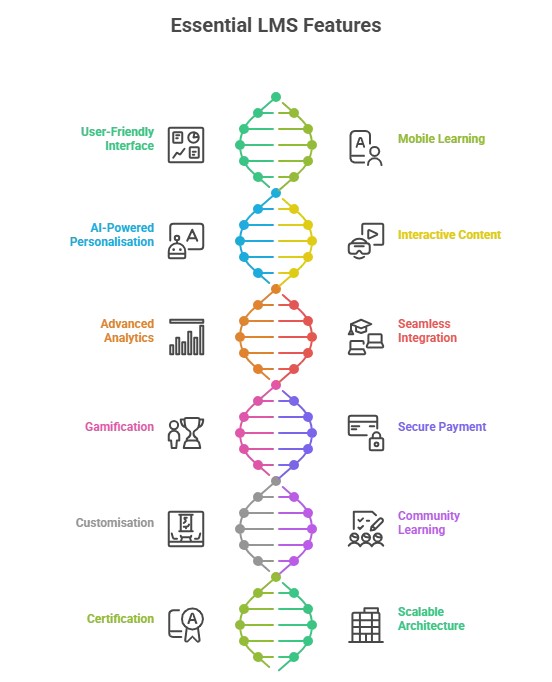
1. User-Friendly Interface and Navigation
One of the biggest reasons learners abandon online courses is poor usability. If a platform feels confusing or difficult to navigate, users lose motivation quickly.
A modern LMS should focus on simplicity and intuitive design, allowing users to easily locate courses, monitor their progress, and engage with learning content without confusion.
Key elements of a user-friendly LMS include:
-
Simple dashboard layout
-
Easy course browsing
-
Clear progress tracking
-
Quick access to learning resources
Many developers today rely on a learning management system script that already includes user-friendly UI components. These scripts reduce development time while ensuring the platform remains accessible for both beginners and experienced learners.
When learners can navigate a platform easily, they spend more time learning and less time figuring out how the system works.
2. Mobile Learning and Cross-Platform Accessibility
Learning in 2026 is no longer limited to laptops and desktops. People learn while commuting, during breaks, or from the comfort of their homes using smartphones.
That is why mobile accessibility has become a critical requirement for modern LMS platforms.
An LMS must support:
-
Mobile-responsive design
-
Dedicated mobile applications
-
Offline course access
-
Seamless syncing between devices
Developers often build mobile-ready platforms using online learning app source code, allowing organisations to launch learning apps quickly while maintaining performance and scalability.
For example, a sales professional might review training modules while travelling, or a student might complete quizzes on their phone between classes. Mobile accessibility ensures that learning happens anytime and anywhere.
3. AI-Powered Personalised Learning
Every learner has a different pace and learning style. Some prefer videos, others prefer reading materials or practical exercises.
Modern LMS platforms use artificial intelligence to personalise the learning experience.
AI-powered features include:
-
Personalised course recommendations
-
Smart learning paths
-
Adaptive quizzes
-
Performance-based content suggestions
If a learner has difficulty with a specific concept, the platform can automatically recommend additional learning materials or exercises to support better comprehension.
Platforms built using scalable learning management system source code can easily integrate AI modules that analyse user behaviour and optimise learning experiences.
Personalised learning helps keep learners more engaged and can significantly improve course completion rates.
4. Interactive and Multimedia Learning Content
Static text-based courses are no longer enough to keep learners engaged. Modern LMS platforms must support rich multimedia content.
Effective learning platforms allow instructors to include:
-
Video lectures
-
Interactive quizzes
-
Infographics
-
Animations
-
Simulations
-
Gamified challenges
Interactive learning promotes active participation, helping students better understand concepts rather than simply absorbing information passively.
For instance, programming courses often include live coding exercises where learners can practise and test their skills directly within the platform. A healthcare training program might include simulations to help professionals practise real-life scenarios.
Many organisations implement these capabilities efficiently using a powerful PHP-based LMS solution, which includes built-in tools for handling multimedia content and organising course structures effectively.
5. Advanced Analytics and Reporting
A key advantage of online learning platforms is the ability to monitor and evaluate learners’ progress using detailed data and insights.
Modern LMS platforms provide detailed analytics that help educators and organisations understand how learners are progressing.
Important analytics features include:
-
Course completion rates
-
Quiz performance reports
-
Learner engagement metrics
-
Time spent on learning modules
-
Drop-off analysis
With this data, instructors can improve learning materials and recognise areas where students may be facing difficulties.
For example, if many students fail a specific quiz question, instructors can revise the lesson to explain the topic more clearly.
Advanced reporting tools built into a reliable learning management system script help organisations make data-driven decisions about training strategies.
6. Seamless Integration with Other Platforms
Modern organisations use multiple digital tools for communication, project management, and productivity. A powerful system like eLMS should integrate smoothly with these systems to create a unified digital ecosystem.
Important integrations include:
-
Video conferencing tools
-
Payment gateways
-
HR management systems
-
CRM platforms
-
Content storage services
For example, an LMS integrated with a video conferencing platform can allow instructors to host live classes directly within the system.
Developers often build such integrations using flexible LMS source code, which supports APIs and third-party extensions.
This level of connectivity makes learning platforms more powerful and convenient for both educators and learners.
7. Gamification to Boost Engagement
Gamification has become a powerful technique for motivating learners. By incorporating game-like elements into the learning experience, LMS platforms make education more enjoyable and engaging.
Popular gamification features include:
-
Achievement badges
-
Leaderboards
-
Reward points
-
Course completion certificates
-
Progress milestones
For example, learners might earn points for completing lessons or participating in discussions. These points can then unlock new courses or achievements.
Platforms developed using scalable online learning app source code often include gamification modules that help educators increase learner engagement and participation.
Gamification encourages consistent learning and helps reduce course dropouts.
8. Secure Payment and Subscription Management
Many LMS platforms offer paid courses, memberships, or certification programs. Therefore, secure payment processing is essential.
A modern LMS should support:
-
Multiple payment gateways
-
Subscription-based access
-
Coupon and discount systems
-
Automated billing and invoicing
For example, an instructor selling professional certification courses should be able to accept payments globally without technical complications.
Developers often use robust PHP-powered LMS systems to integrate payment gateways and manage user access in a streamlined and efficient manner.
Secure payment handling ensures trust and convenience for both course creators and learners.
9. Customisation and Branding Capabilities
Every educational organisation or business wants its learning platform to reflect its brand identity.
Modern LMS platforms should allow full customisation of the interface, including:
-
Brand logos
-
Colour schemes
-
Course layouts
-
Landing pages
-
User dashboards
Developers frequently use flexible pre-designed LMS layouts that enable organisations to customise the platform’s design and appearance without requiring extensive coding knowledge.
For example, a university might want a formal academic interface, while a corporate training platform might prefer a sleek and modern design.
Customisation helps organisations create a unique learning experience that aligns with their brand identity.
10. Community Learning and Collaboration Tools
Learning becomes more effective when learners have opportunities to collaborate and share ideas with others.
Modern LMS platforms should include community-building features such as:
-
Discussion forums
-
Group learning spaces
-
Peer-to-peer messaging
-
Instructor feedback channels
-
Live Q&A sessions
For example, students in an online marketing course might share campaign strategies or discuss real-world case studies.
Platforms designed with a modular learning management system script often include community engagement tools that make online learning more interactive and collaborative.
These features transform learning from a solitary activity into a shared experience.
11. Certification and Skill Validation
Certifications play a significant role in validating achievements in online learning. They help learners validate their skills and demonstrate expertise to employers.
A modern LMS should support automated certification systems.
Key capabilities include:
-
Course completion certificates
-
Digital badges
-
Skill-based assessments
-
Verifiable credentials
Many platforms built using scalable learning management system source code allow automatic certificate generation once learners complete the required lessons and assessments.
For professionals, these certifications become valuable assets when applying for new roles or promotions.
12. Scalable Architecture for Growing Platforms
As online education continues to grow, LMS platforms must be able to handle thousands of learners simultaneously.
Scalability ensures that platforms maintain performance even as user numbers increase.
Important scalability features include:
-
Cloud hosting compatibility
-
High-performance databases
-
Load balancing
-
Modular architecture
Developers often rely on reliable LMS website template systems combined with optimised backend structures to support large-scale learning environments.
For example, a university delivering global online courses may need to support thousands of students accessing the platform simultaneously.
A scalable architecture ensures smooth performance regardless of user demand.
Conclusion
The future of online learning is evolving quickly, and LMS platforms must adapt to meet the changing expectations of learners, educators, and organisations. A modern LMS in 2026 is expected to offer much more than just a platform for hosting courses. It should provide engaging content, personalised learning paths, seamless integrations, advanced analytics, and a mobile-first experience. Technologies such as AI-driven recommendations, gamification, advanced reporting, and collaborative learning tools are transforming the way online education is delivered.
By adopting these capabilities, organisations can build effective learning ecosystems for education and professional development. Businesses that invest in modern eLMS solutions today will stay competitive, and companies like WRTeam help organisations build powerful platforms for the future.